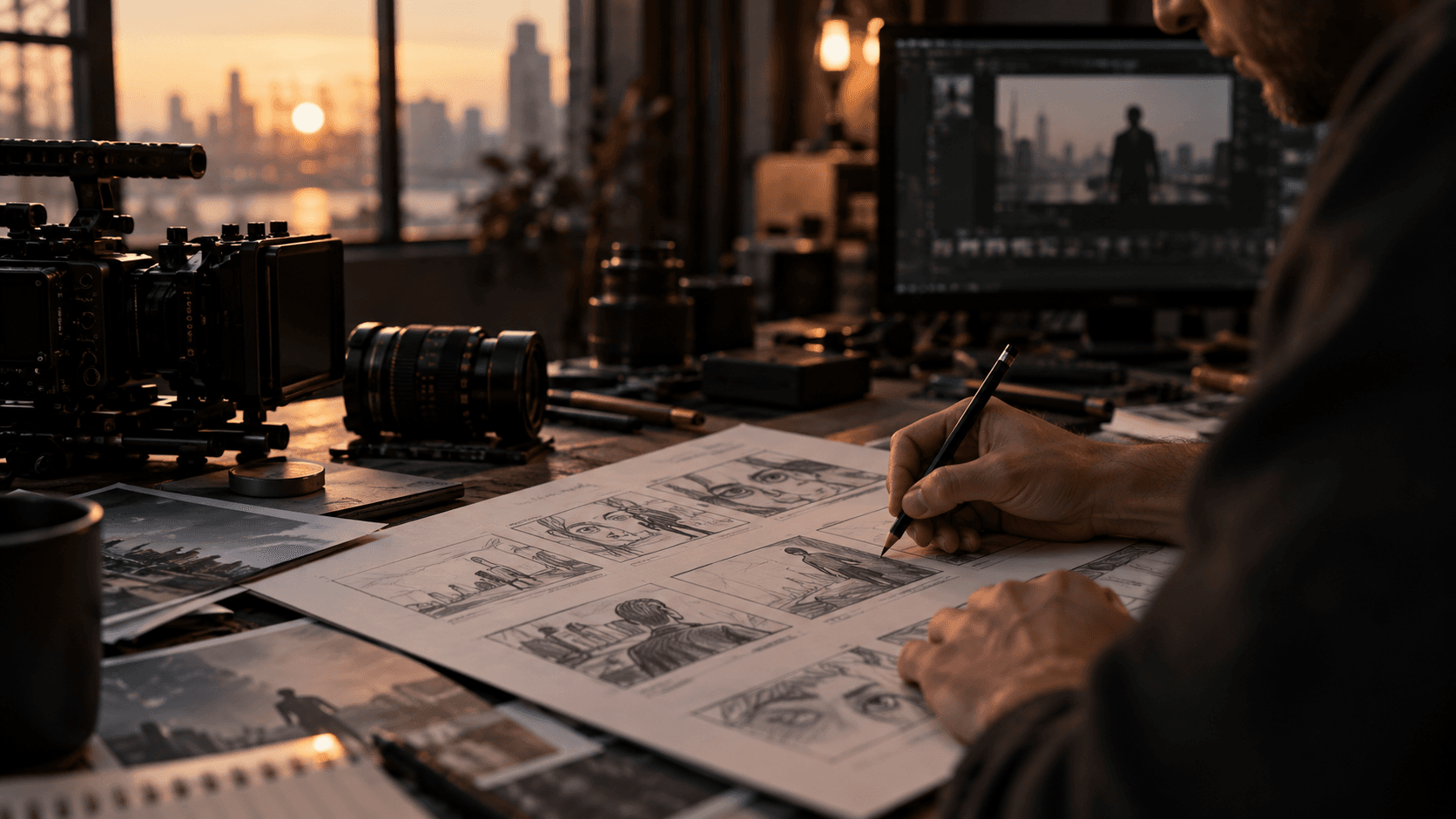
Begin with the change you want to show
A film needs more than a list of attractive images. Write down what changes between the opening and the ending. In a product story, that might be the movement from a difficult everyday task to a simpler way of working. In a music video, it could be a shift in energy, place or mood. This gives you a reason for each shot.
Write visible actions
Translate abstract feelings into things a viewer can see. Instead of “a researcher is frustrated,” describe a moment: the researcher stops typing, looks at the clock and leans back. Specify the subject, action, framing and camera movement. One clear action is usually easier to judge than several competing actions in the same shot.
Vary the framing without losing the story
A wide shot can establish a place. A medium shot can show an action, and a close-up can reveal a detail or reaction. Do not repeat the same person-at-a-desk composition for every beat. A shot of a hand, an over-the-shoulder view and a wider view can all serve the same scene while giving the sequence variety.
Review one shot before scaling up
Before generating the whole sequence, review one representative shot for character, environment and style. If it misses the brief, revise the references or prompt first. Keep a simple acceptance checklist: is the action correct, is the character recognisable and is the image useful in the sequence? Generative results vary, so a successful first shot is guidance rather than a guarantee.
Build the sequence in REEL
Choose Music Video, Story to Film or Script to Film according to your source material. Prepare your storyboard, review shot versions and select the ones you want to use. Check the selected sequence in Timeline before creating a Final Production render. Treat these as separate decisions: planning the film, making the visuals and assembling the finished output.
Put the plan into practice.
Start a REEL project →